
#english
‘Blessed’ Homecoming and Indian Setback
- Opini
- /
- 06/05/2021
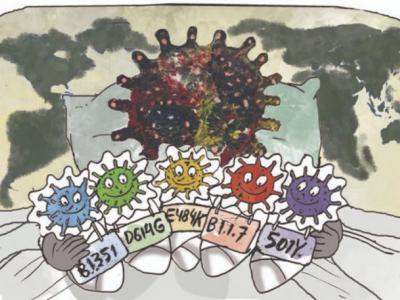
It is an amazing turnaround initial praise won over the progress toward herd immunity turning chaotic in just a short time due to “herd ignorance”. The alarming spike in coronavirus cases in India should serve as a prompt reminder for our country in the face of Lebaran (Idul Fitri). It is also worth pondering whether promoting local tourism is justifiable while we prohibit mudik (Idul Fitri exodus). One large crowd is prevented, but another is encouraged. We need to adopt an attitude of protecting our own safety. Let us look at India, which is now in the spotlight of global concerns. This country of 1.393 billion people is big in many ways and this time it is related to the coronavirus. India began vaccination rollout on January 16, 2021 and as of early March, 18 million people had been vaccinated. At one point, more than a million jabs were given daily, which is a world record. The ambition was that it expected to be able to vaccinate 300 million citizens in just seven months. The ambition and the following vaccination progress drew praise from various parties, including many circles in Indonesia.
Responding to the New Covid-19 Variant
- Opini
- /
- 08/04/2021
A year after we entered the Covid-19 pandemic, the light at the end of the tunnel seems to be more distant. According to data issued by the Covid-19 task force, it seems that we have reached the peak of the Covid-19 curve. However, after the global curve flattened drastically, it seems to be rising again slowly. Data from the task force shows that the peak of the curve was reached on Jan. 30, 2021, when the number of new daily cases reached a high of 14,518. By March 13, the number of daily cases had dropped dramatically to 4,607. For comparison, at the same time, Brazil surpassed India to become the second-worst-hit country from Covid-19 pandemic. According to data from the Worldometers website from 19 March, the first place was still held by the United States with 30,357,255 cases, nearly 10 percent of the US population of 332 million.

Thromboembolic involvement and its possible pathogenesis in COVID-19 mortality: lesson from post-mortem reports
- Artikel Ilmiah
- /
- 12/03/2021
Abstract. – The emergence of Coronavirus Disease 19 (COVID-19) as a pandemic has claimed hundreds of thousands of lives worldwide since its initial breakout. With increasing reports from clinical observations and autopsy findings, it became clear that the disease causes acute respiratory distress syndrome (ARDS), as well as a broad spectrum of systemic and multiorgan pathologies, including angiopathy, endothelialitis, and thrombosis. Coagulopathy is associated with the activity of megakaryocytes, which play crucial roles in modulating the platelet homeostasis. Only a few autopsy reports include findings on thrombosis formation and the presence of megakaryocytes. Here we review and summarize the possible involvement and the pathophysiology of the thromboembolic events in COVID-19 patients based on post-mortem reports. We reviewed post-mortem reports from March 2020 to September 2020.
Vaccine-induced and Natural Immunity
- Opini
- /
- 02/03/2021
Which is more effective, immunity that is induced by vaccination or immunity acquired after being infected with Covid-19? This question is important to raise after Covid-19 has exceeded the positive rate of a million, triggering the government to take the pandemic more seriously. Vaccination is being intensified. The first phase for healthcare workers is under way and will soon be followed by the next group of priority recipients. The government also imposes public activity restrictions (PPKM), with several provinces applying micro-scale PPKM, which are watched over by the Public Order Agency (Satpol PP), the National Police and even the Indonesian Military. This indicates the government’s greater awareness of mobility restrictions as an important pillar to prevent the spread of infection besides increasing testing and tracing. We certainly should not ignore the criticism of some epidemiologists about the presence of data on millions of affected people that are claimed to be hidden.
Vaccination and Threat of Virus Mutation
- Opini
- /
- 26/01/2021
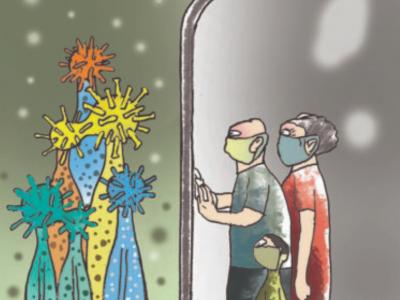
The new chapter opened with the Covid-19 vaccine, which has buoyed public optimism, needs to be accompanied with honesty (and fairness) in government policies. The new chapter opened with the Covid-19 vaccine, which has buoyed public optimism, needs to be accompanied with honesty (and fairness) in government policies. The Food and Drug Monitoring Agency has issued emergency use authorization after the Indonesian Ulema Council stated that the Sinovac vaccine is halal. President Joko Widodo became the first person to receive a Sinovac shot on 14 January 2021 to set an example for Covid-19 immunization. A week earlier, Coordinating Economic Minister Airlangga Hartarto as the chairman of the Committee for Covid-19 Handling and National Economic Recovery announced the enforcement of new large-scale social restrictions (PSBB) for Java and Bali from 11-25 January. This is a good step, as well as a corrective one.